Let’s learn horse colors – Grey

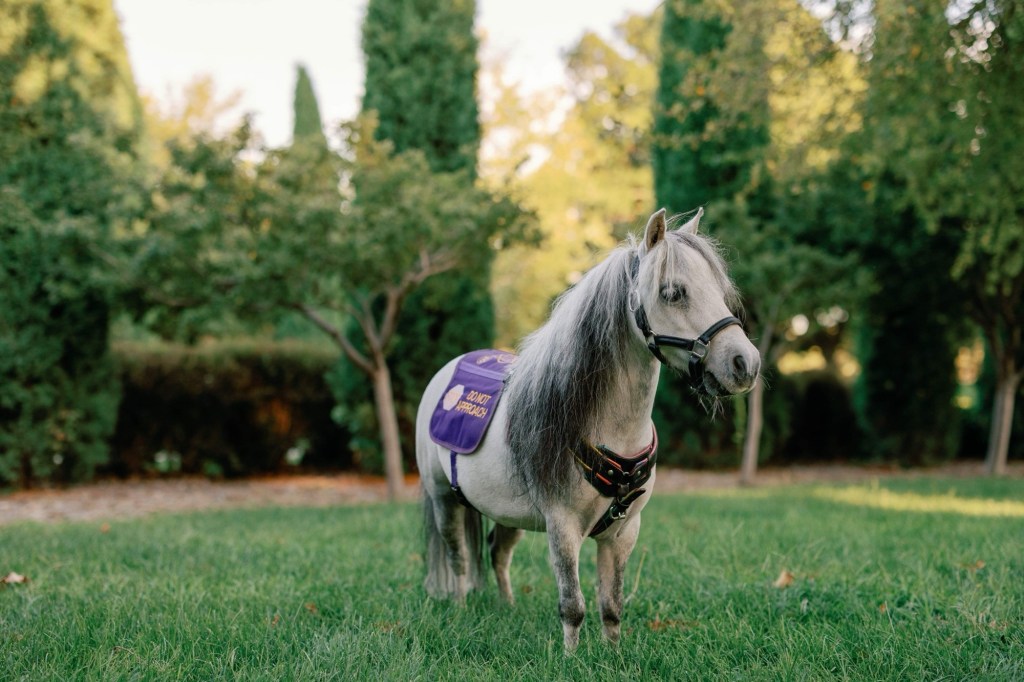
Flirty, a small, light grey mini horse, stands in a green field with trees and greenery in the background. She is standing at an angle to the camera, showing off her beautiful ombre mane that is light grey on top, and dark grey or almost black on bottom. She is wearing a black halter and her black harness with rainbow trim, and a purple vest.

Gray 

🌈 All the Pretty Little Ponies 🌈 

🤍 Grey 🤍 

This week, we’re going to switch gears a little bit and talk about the absence of color.  

Grey is a beautiful and very interesting color that is highly priced in some breeds of horses. Technically speaking, however, it isn’t even truly a color. 

Grey results from a loss of hair pigment overtime. Grey horses are born a base color and become gray with age. Grey is dominant, meaning every grey horse has at least one grey parent. Those grey ancestors stretch back in an unbroken line to the very first gray horse thousands of years ago. 

Grey affects every coat color. If a foal is born with a hyperpigmented coat and a sprinkling of white around the eyes, commonly referred to as goggles, you know that it inherited the grey gene from one of its parents. 

There is a huge variety in the speed and manner in which horses turn gray. The rate at which horses grey, and whether or not they will eventually turn all white, depends on the number of grey mutations that a horse carries. 

An interesting study in 2024 found that the mutation that causes greying is a triplicate of an area on the STX17 gene, meaning that horses with two copies of gray have six genetic mutations. This seems to explain why some horses grey so much faster than others. Some horses are completely white at just three or four years of age, and others never completely lose all of their pigment. 

To distinguish a fully grey horse from one that was born white, look at their skin. A horse that is born white will have pink skin. A horse that turns grey will have black skin, unless it also has a spotting pattern, meaning pinto or appaloosa patterns. 

Some horses will lighten fairly uniformly, while others will turn dappled or flea bitten. A dapple grey horse will have light spots with dark around the edges, and a flea bitten horse will be grey with flecks of the dark base coat throughout. 

Unfortunately, there is a very strong correlation between grey and melanomas. The faster a horse turns grey, the more likely they are to develop melanomas. These tumors tend to be benign, and don’t cause problems unless they grow in an inconvenient area. However, they can and do cause problems and can be fatal. The research done by Swedish scientists that I referred to earlier appears to hold an explanation for the vast difference in rates of greying and risk for melanomas. With recent scientific developments allowing people to look at the genetic mutations that cause grey, and a better understanding of the risk of melanomas, people are continuing to study the relationship. A vaccine to reduce the risk of melanoma has been in development for a few years now. 

Unfortunately, you won’t see any grey horses in our program. All of that white hair is way more difficult to keep clean, and an unfair challenge for a blind or visually impaired person. Not that grey horses can’t be great service animals, but we don’t want to make that choice for someone else. 

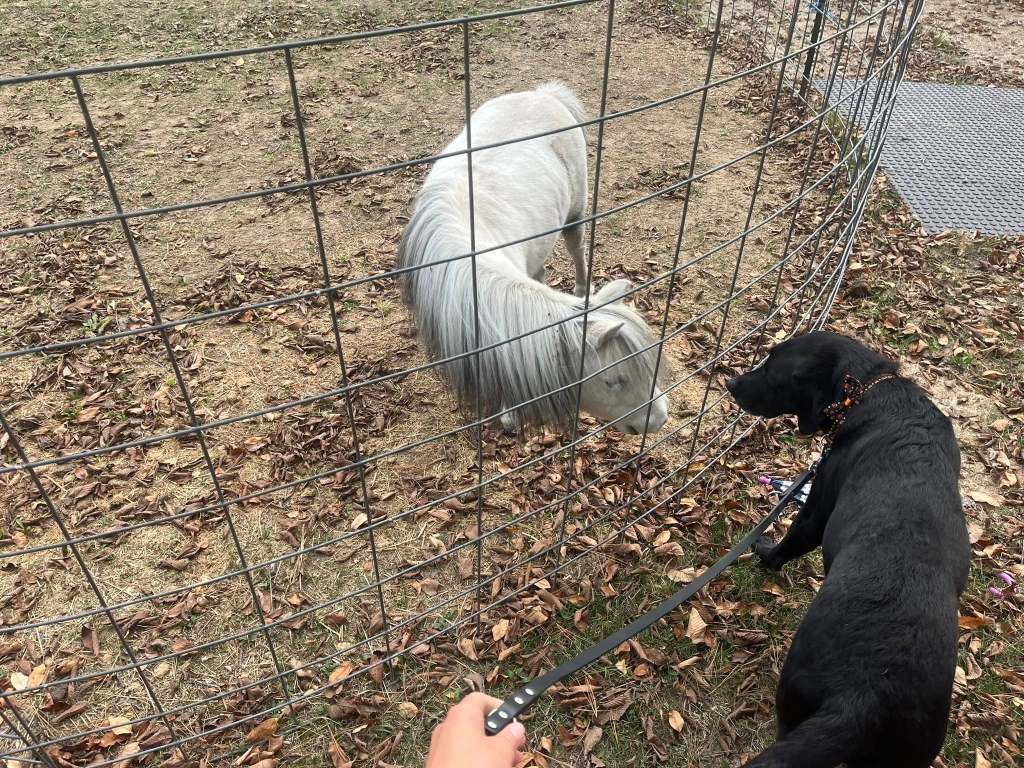
Flirty, the service horse of one of our trainers and board members, is grey. You can see how she practically doesn’t even look like the same horse anymore. I also included several photos of other grey horses to show just how different they can look both throughout the greying process and from horse to horse.
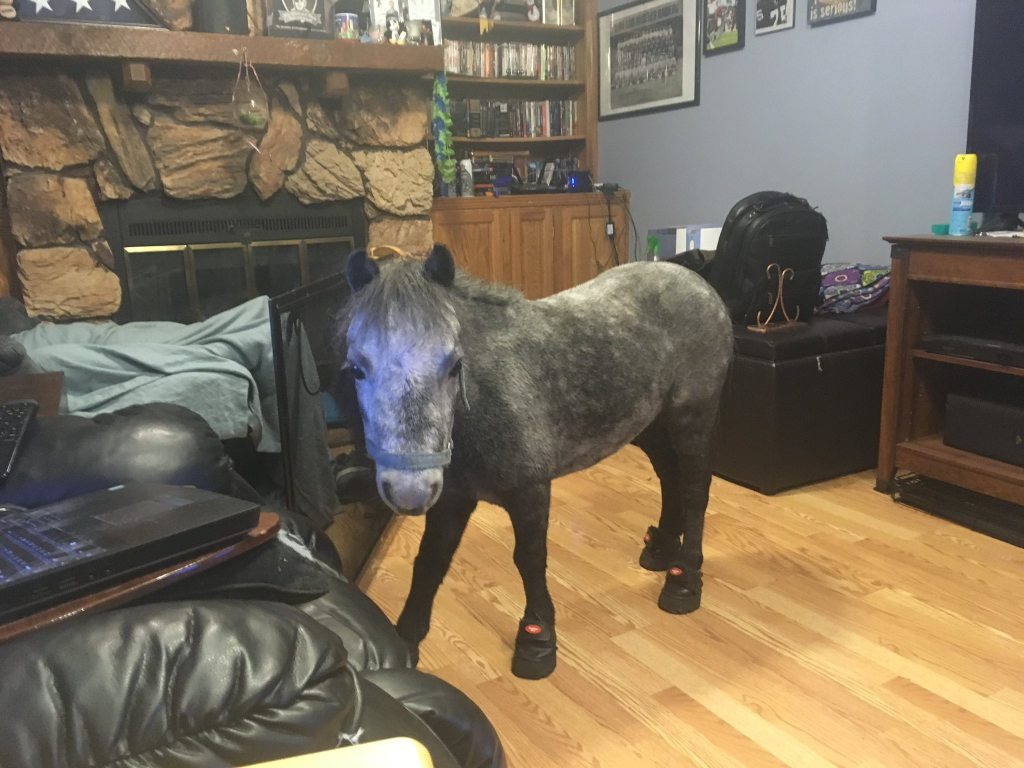
A steel grey mini horse with dapples stands in a living room. Her body is steel grey and her legs are black. Her forelock is steel grey, as well. She is looking at the camera, her face a little bit lighter than the rest of her body. She’s wearing a light blue halter and black hoof boots.
Flirty at five years old. At this point, she was a steel grey mini horse with dapples. She is pictured here standing in a living room. Her body is steel grey and her legs are black. Her forelock is steel grey, as well. She is looking at the camera, her face a little bit lighter than the rest of her body. She’s wearing a light blue halter and black hoof boots.
A mini horse and black labrador sniff one another through a wire fence. The mini horse, Flirty, is a nearly perfect, vibrant white. The only areas of pigment left are a bit of a light gray ombre at the bottom of her long mane and some light gray around her knees and hocks.
Flirty, 13 years old in this photo, stands behind a wire fence and sniffs a black labrador Flirty is a nearly perfect, vibrant white. The only areas of pigment left are a bit of a light gray ombre at the bottom of her long mane and some light gray around her knees and hocks.

The third photo is a pony from a farm that Teagan worked at for a time. She is both grey and a pinto, but you can still see much of her base coat. Even though she is in her late teens, you can see just how much color she still has on her body. This would mean that she definitely carries far fewer grey mutations than a horse like Flirty. 
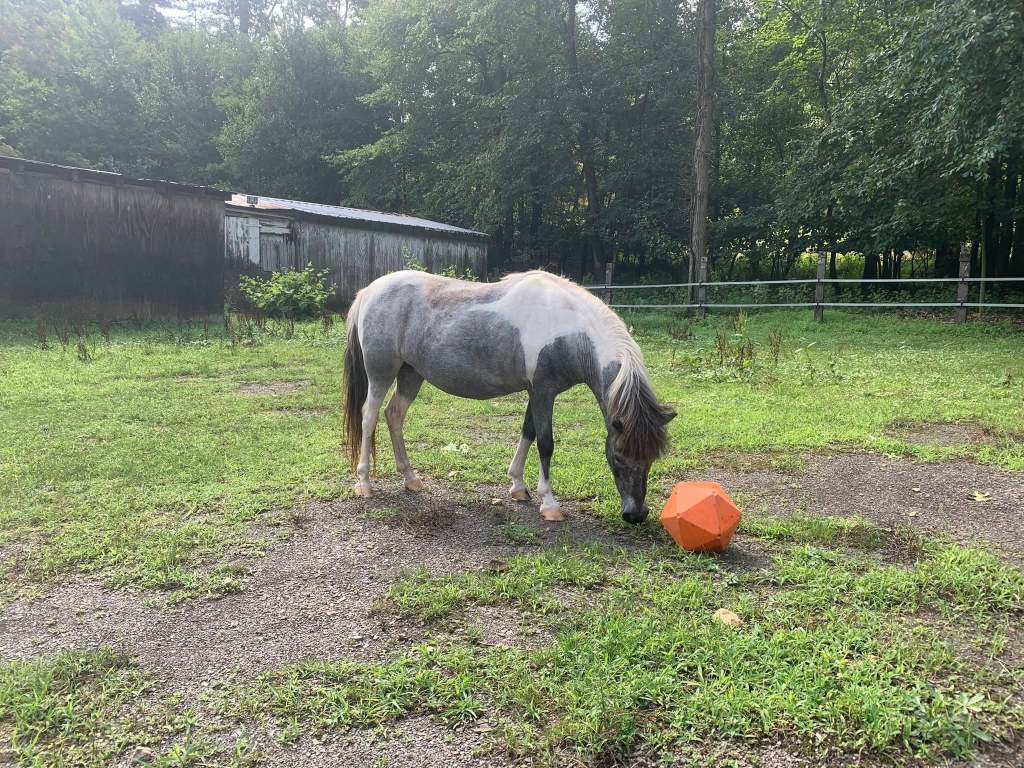
A petite but chubby pony sniffs at the ground near an orange polyhedral toy. The pony has a mostly grey coat with white patches. Her back and the upper part of her neck are covered with a white area that extends down toward her shoulders. Her body, where she doesn’t have the pinto patches, is a medium shade of gray. Her mane and tail are a mix of white and grey, with some brownish hues especially near the head. Her head and lower legs are a significantly darker grey, almost black. 

The fourth photo is an example of a dapple grey. And yes, that is a young Teagan.  
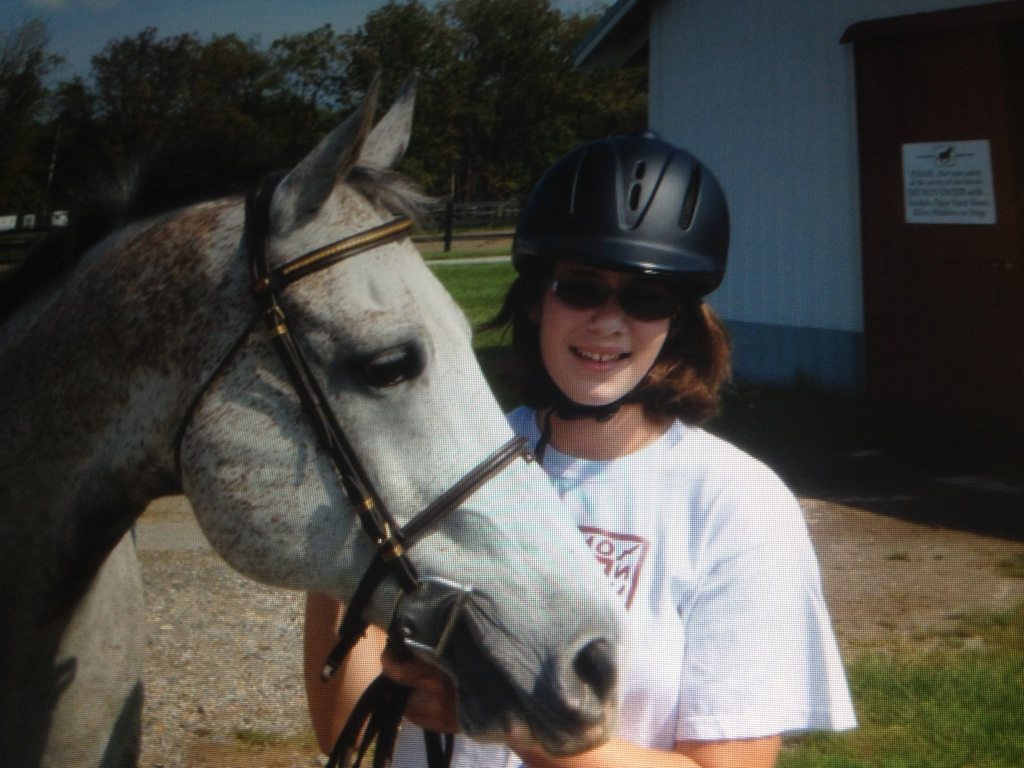
A close-up view shows a young rider standing holding a horse tacked up in English gear, the head and neck of the horse visible. The horse is primarily a light grey color, but his coat displays intricate variations in shading and patterns. Across the face and neck, there are dapples and speckles in darker grey, giving it a textured, slightly mottled appearance. His muzzle and around his eyes are a slightly deeper, charcoal-toned grey compared to the rest of his face. His mane has a mix of both black and gray strands, with darker hair along the top. Around the lower jaw and under the chin, the grey becomes subtly lighter, almost merging into white in some places. Some of the flex of color and dapples have a more reddish brown hue than the rest of the coat. 

The fifth photo is an example of a horse with flea bites.  
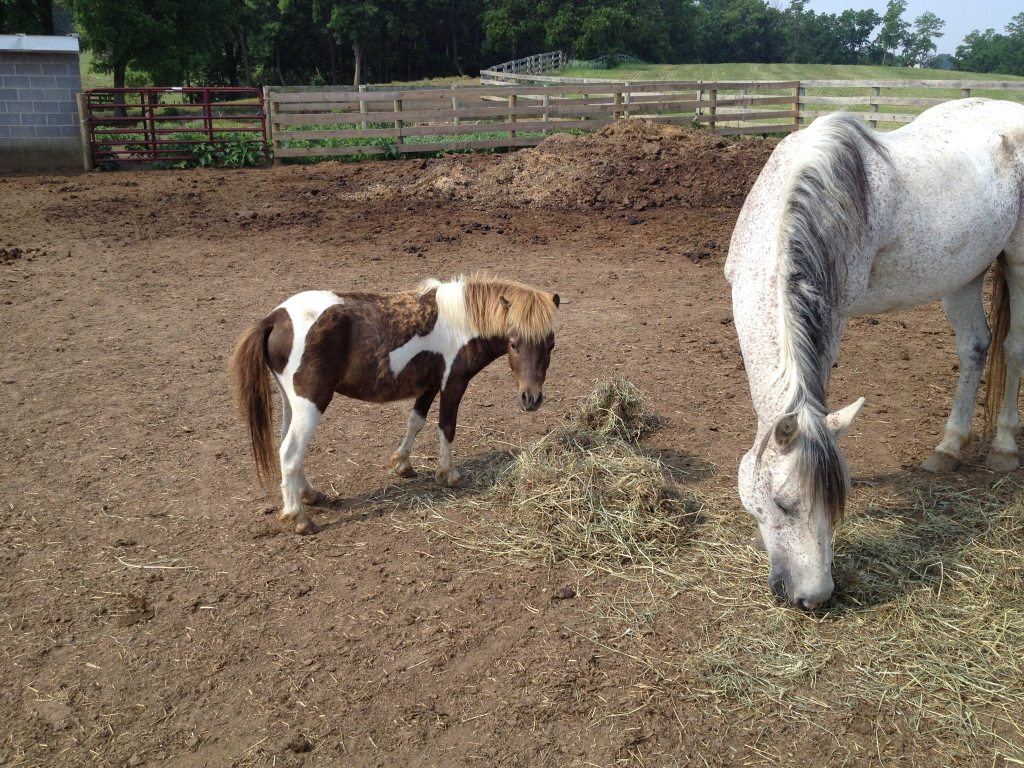
A brown and white pinto, mini horse graces near a full sized, flea bitten gray horse. The grey horse has a predominantly white coat, her body covered in countless small, darker grey speckles. The speckles, correctly called flea bites, are especially concentrated on her neck, shoulder, and upper legs. Her mane and the base of her tail are a mix of lighter and darker grey, with some sections appearing almost silvery near the roots and darker, almost black, strands running through the mane, particularly along the top. Her face shows a gentle gradient of color, starting almost white on the muzzle and darkening slightly as it blends toward the ears, where the speckling increases. Her lower legs are lighter with fewer spots, and her belly and inside of her limbs are mostly a plain, soft greyish white. 

Image descriptions of header photo: Flirty, a small, light grey mini horse, stands in a green field with trees and greenery in the background. She is standing at an angle to the camera, showing off her beautiful ombre mane that is light grey on top, and dark grey or almost black on bottom. She is wearing a black halter and her black harness with rainbow trim, and a purple vest.

Leave a comment