 Black
Black
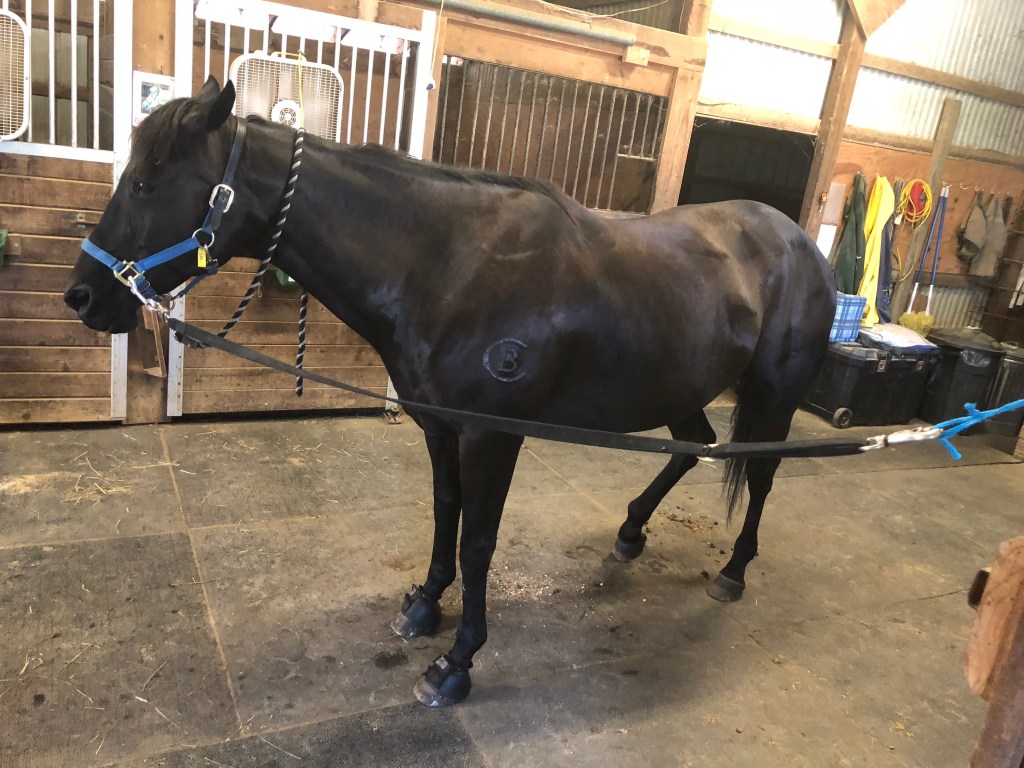
Continuing our journey through the world of horse colors, let’s talk about the color black.
Black is a visually stunning color that is more common in some breeds then in others.
A true black horse will have only black pigment – no red. Extremely dark bays and liver chestnut‘s can look black, but they will have reddish hair in areas like the armpits, groin, inside the ears, and the muzzle. Looking at these areas is the best way to determine if a horse is truly black or a very dark shade of brown.
The reason that it can get confusing is that many black horses sun bleach. There are dietary, genetic, and environmental factors that influence how much an individual horse will sun bleach. An overall lack of good nutrition, a lack or inappropriate balance of copper and zinc in the diet, sweat left on the coat and not washed off, direct exposure to sunlight, and carrying non-dun one, a gene that we will talk about in the future post, all make a horse more susceptible to sun bleaching. Sun bleached black hair takes on different red and brown tones.
Occasionally, some black horses do not fade at all. They stay a striking, dark black, referred to as non-fading black or true black.
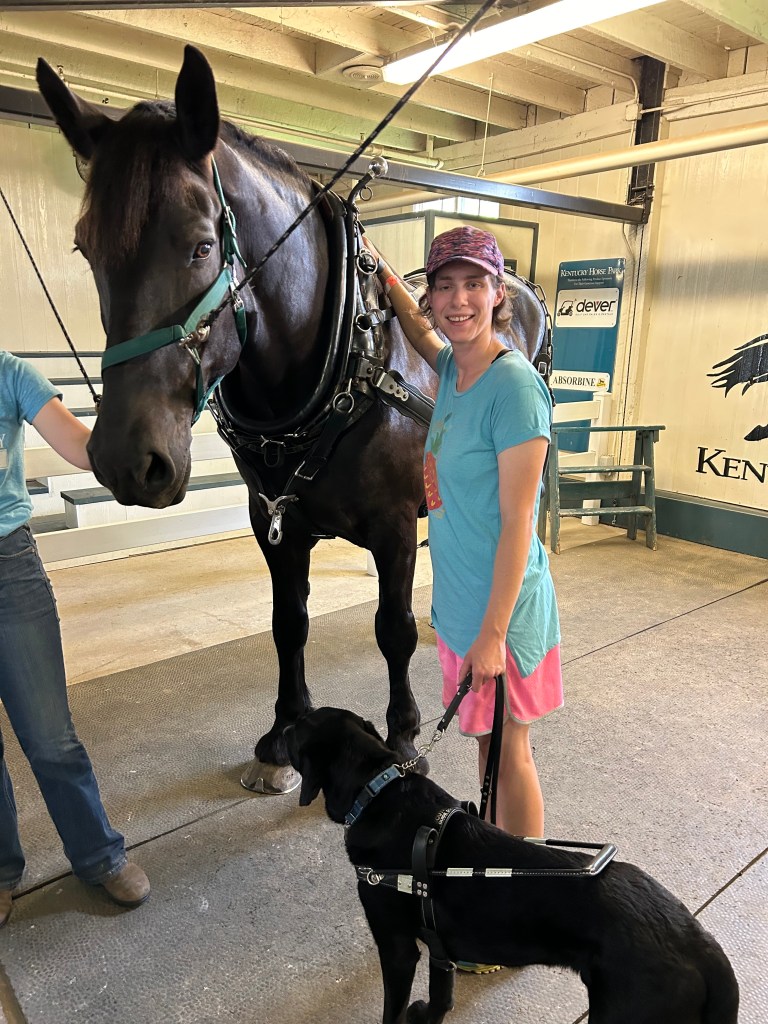
When talking about equine colors, black is often referred to as a base color. Nothing in nature is ever quite as simple as it seems, but that makes for an easy way to think about colors.
All horse colors can be thought of as additions to the base colors of black and chestnut, which we will talk about next time.
This handsome little man is Spencer. He is one of our personal horses who is too large to be a service horse, but who you might see helping us out around the farm.
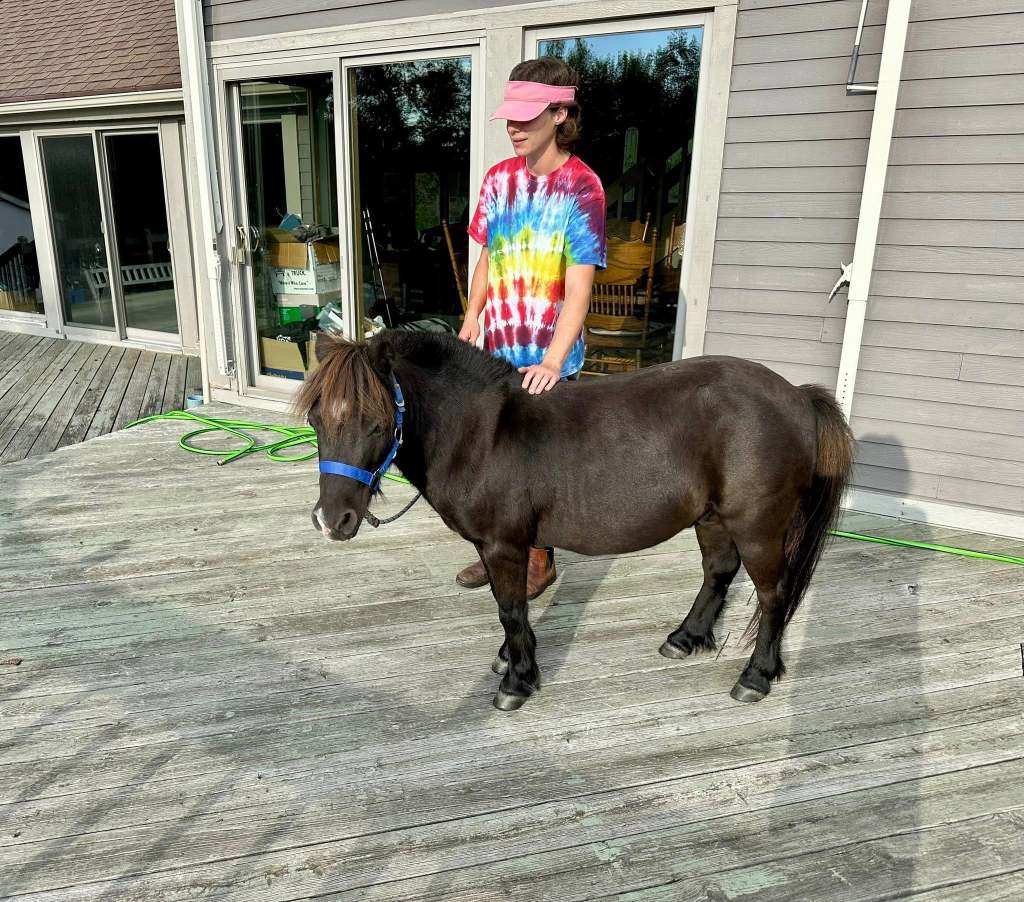
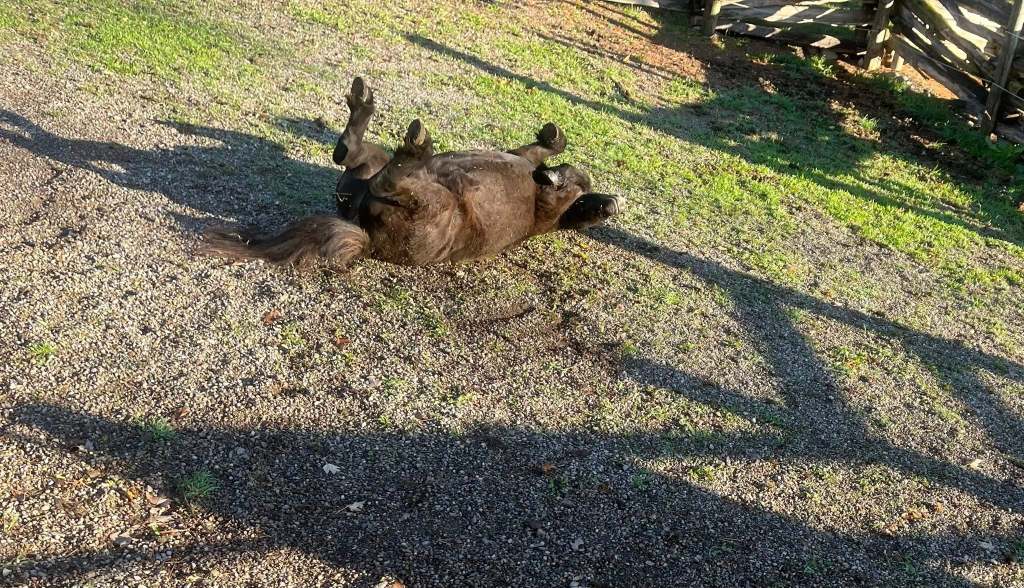
The second photo demonstrates why he might look more chocolate than black most of the time. With a super good grooming session, you can get all of the dust out of his coat and turn him much darker. After a bath, he magically turns to a true, pitch black. For a little while anyway.
 Cheval Assistants and Leaders for Independence
Leave a comment