 All the Pretty Little Ponies
 Wild Bay
If you’re new to horse colors, the many different terms and huge number of factors can seem overwhelming. I decided to split the information in this post from the post about bay, because it breaks the rules I laid out in the bay post.
Nature is very rarely black and white.
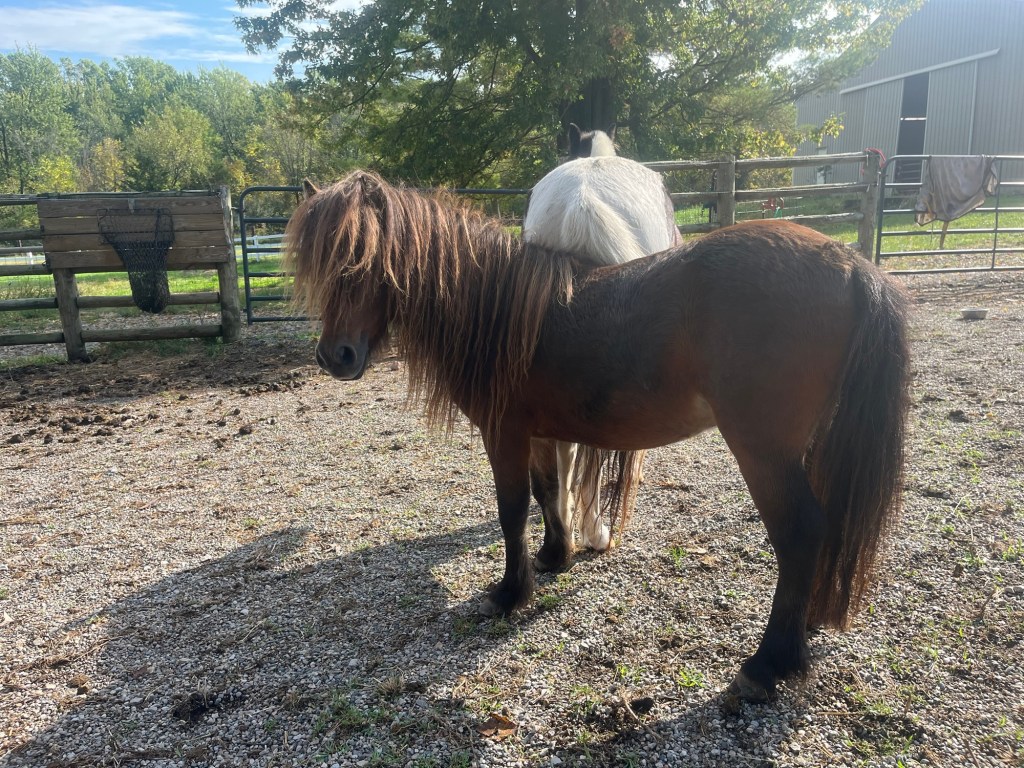
So, if a bay horse has a red body and a black mane, tail, and legs, how is it that Sonic is a bay? People regularly think that he’s chestnut, and I don’t blame them, but I do promise that he’s bay.
Sonic has a number of things going on that make him look so different from the usual bay. One of those things is quite simply that he is a miniature. Minis, and other small ponies, absolutely love to break the rules about color. You will very often see weird things going on with them that you rarely, if ever, see in other breeds.
For instance, I don’t know if Sonic is actually a wild bay. He sure looks like one, but he may not stay that way.
Newborn foals are very often odd colors that you only see until they shed for the first time. It is very common for bay horses to have brown in their manes and tails, which is referred to as foal flaxen or foal camo. Minis, Shetlands, and other ponies are prone to holding onto their foal flaxen for far, far longer than is typical. Even though he’s a full three years old, it is entirely possible that Sonic’s multicolored mane is just foal camo. With time, it may begin to grow in completely black. With minis, that sometimes doesn’t happen until they are five years old. Personally, I’m crossing my fingers that Sonic gets to keep his gorgeous highlights.
Because yes, some horses absolutely do. Light maned bays are a thing. They certainly are not common, and we don’t yet know why it happens, but you will occasionally see a bay with some amount of flaxen hair in their mane and or tail. From a distance, they may just look sun faded, but up close you can clearly see that they are growing light hairs separate from the dark ones. This is seen much more commonly in Arabians than other breeds. A common term for a bay tail with flaxen is Gulastra Plume, named for an Arabian stallion with the trait who brought a lot of attention to it.
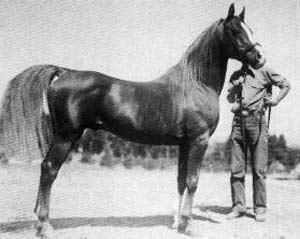
Wild bays, so-called because they much more closely resemble the original, wild horse color, are similar to a bay, but with much less black. They tend to only have black as high as their pasterns, with smudges on their hocks, though this can vary. Their manes and tails will have some amount of brown as opposed to being completely black.
There is one more trait, called mealy, that Sonic also has, though his is more minimal. Mealy, also called pangre, refers to lighter areas around the flank, eyes, and muzzle. Think of donkeys. Most of them have this trait, and it is often extremely pronounced. This is a good way to tell an extremely dark brown horse from a black one, as mealy only affects red pigment. Even if the horse looks black, particularly in winter, if it has red, yellow, or cinnamon highlights on its flank and face, It’s actually a bay. This extremely dark shade of bay with mealy highlights is called brown or seal brown. It is thought that it is a completely separate color from bay, and at one point, there was even a genetic test for it. However, after the test went to market, it was found that the results were not reliable with miniature horses (remember what I said about them breaking the rules?) and the test was pulled from the market.
So, what is the giveaway that Sonic is a bay?
He has a black tail and black on his legs. Even though he has far more red than is typical for a bay, it would not be possible for him to have those black areas if he were a chestnut.
Whether or not he will hold onto those lighter areas remains to be seen.
Image description: Sonic stands in left profile to the camera in a paddock with pea gravel footing, the butt of a brown and white pony in the background. He is a rich, medium brown with subtle shade differences, such as slightly lighter flanks, on his body. His tail and lower legs are black. He has a gigantic, fluffy mane and forelock that covers the side of his face and neck. The hair is a mix of different shades, but most prominent is a caramel brown that is lighter than the brown of his body.
 Cheval Assistants and Leaders for Independence
Leave a comment